Introduction
The Seven Trumpets of Revelation are among the most dramatic and significant prophetic visions recorded in the Bible. Found in Revelation chapters 8–11, the trumpet judgments reveal God’s righteous response to human rebellion while demonstrating His mercy by calling people to repentance before the final judgment.
Throughout Scripture, trumpets served many purposes. They announced worship (Numbers 10:1–10), gathered God’s people, warned of danger, proclaimed victory, and signaled important events. In Revelation, the seven trumpets announce successive judgments that affect the earth, sea, rivers, heavens, and humanity. These judgments prepare the way for the fulfillment of God’s redemptive plan and the establishment of Christ’s eternal kingdom.
Although Christians hold different views regarding the timing of these events, nearly all agree that the seven trumpets reveal God’s sovereignty over history and His desire for people to turn to Him before it is too late.
The Setting of the Seven Trumpets
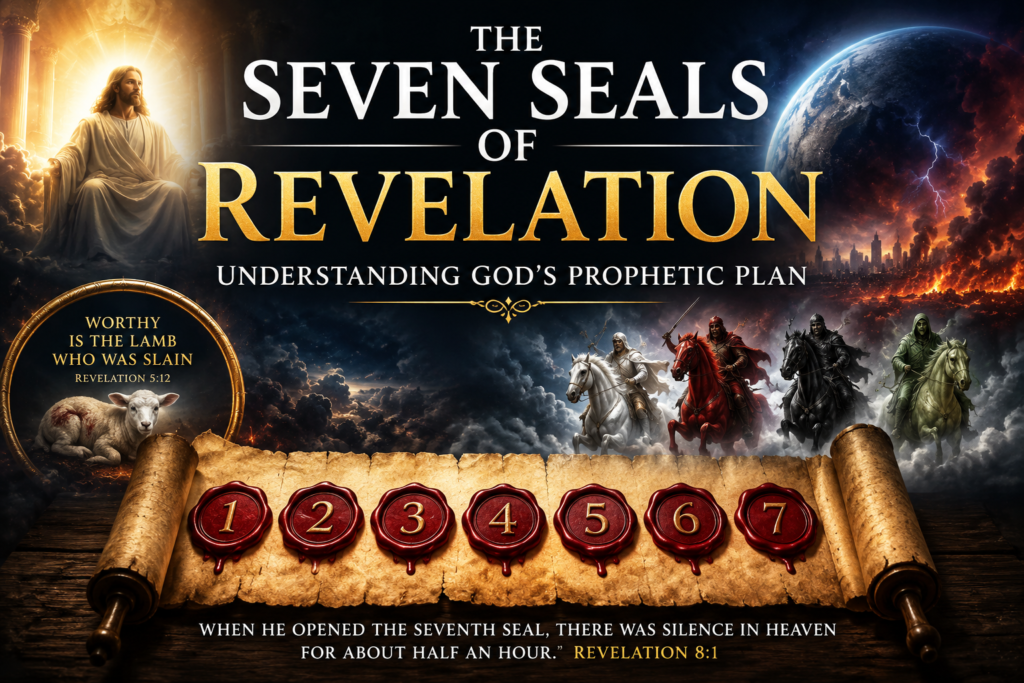
Before the trumpets sound, the Apostle John sees the Lamb of God, Jesus Christ, opening the seventh seal (Revelation 8:1). Heaven becomes silent for about half an hour, emphasizing the seriousness of what is about to occur.
John then sees seven angels standing before God, each receiving a trumpet. Another angel offers incense with the prayers of God’s people upon the golden altar before God’s throne (Revelation 8:3–5). This beautiful scene reminds believers that God hears the prayers of His faithful people even during times of judgment.
The sounding of each trumpet introduces a new stage in God’s prophetic plan.
The First Trumpet: Judgment on the Earth
Bible Reference: Revelation 8:7
The first angel sounds his trumpet, and hail and fire mixed with blood are thrown upon the earth. One-third of the earth, trees, and all green grass are burned.
This judgment recalls the plague of hail upon Egypt (Exodus 9:22–26), demonstrating that the God who judged Pharaoh also governs the future of the world.
Many scholars understand this judgment symbolically, representing devastation upon human civilization and the natural world, while others interpret it as a literal future event. Regardless of the interpretation, the first trumpet reveals that God’s judgments are both just and purposeful.
The Second Trumpet: Judgment on the Sea
Bible Reference: Revelation 8:8–9
The second trumpet sounds, and something like a great mountain burning with fire is thrown into the sea. One-third of the sea becomes blood, one-third of marine life dies, and one-third of the ships are destroyed.
The sea often symbolizes the nations and the economic systems that sustain human society. Whether interpreted literally or symbolically, this judgment demonstrates that no part of creation is beyond God’s authority.
Commerce, transportation, and food supplies are severely affected, reminding humanity that earthly security is temporary.
The Third Trumpet: The Star Called Wormwood
Bible Reference: Revelation 8:10–11
The third angel sounds his trumpet, and a great star named Wormwood falls from heaven upon rivers and springs. The waters become bitter, causing many people to die.
In the Old Testament, wormwood frequently symbolizes bitterness, sorrow, and divine judgment (Jeremiah 9:15; Lamentations 3:15).
Some interpreters view the falling star as a celestial event, while others see it as a symbol of spiritual corruption or judgment upon sources of life. In either case, the vision teaches that rejecting God ultimately leads to spiritual and physical consequences.
The Fourth Trumpet: Darkness Over Creation
Bible Reference: Revelation 8:12–13
The fourth trumpet strikes one-third of the sun, moon, and stars, reducing their light.
Darkness is a recurring biblical symbol of judgment. During the Exodus, Egypt experienced a plague of darkness before the final plague (Exodus 10:21–23). Likewise, Jesus spoke of cosmic signs preceding His return (Matthew 24:29).
After the fourth trumpet, an eagle flies through the sky proclaiming:
“Woe! Woe! Woe to those who dwell on the earth.”
This warning prepares readers for the final three trumpets, often called the three woes, because they involve even more severe judgments.
God’s Purpose in the Trumpet Judgments
The trumpet judgments are not acts of uncontrolled anger. Instead, they demonstrate several important truths.
First, they reveal God’s holiness and justice. Sin has consequences, and God will ultimately judge evil.
Second, the judgments are partial. Repeatedly, Revelation mentions that one-third of creation is affected rather than everything. This limitation reflects God’s mercy, allowing opportunity for repentance before final judgment.
Third, the trumpets remind believers that history is moving toward God’s appointed conclusion. Evil will not continue forever, and Christ will ultimately establish His righteous kingdom.
As Christians study these passages, the emphasis should not be on fear or speculation but on faithfulness, repentance, and hope in God’s sovereign plan.
The Fifth Trumpet: The First Woe
Bible Reference: Revelation 9:1–12
The fifth trumpet introduces the first of three woes. John sees a star that has fallen from heaven and is given the key to the Abyss. When the Abyss is opened, smoke rises like that from a great furnace, darkening the sky. From the smoke emerge locust-like creatures with extraordinary power.
Unlike ordinary locusts, these creatures are commanded not to harm vegetation but to torment people who do not have God’s seal on their foreheads. Their torment lasts for five months, causing such intense suffering that many long for death but cannot find it.
The leader of these locusts is called Abaddon in Hebrew and Apollyon in Greek, both meaning “Destroyer” (Revelation 9:11).
Bible scholars offer different interpretations of this vision. Some understand the locusts as symbolic of demonic forces released during the end times, while others see them as representing oppressive political or spiritual powers throughout history. Despite these differences, the central message remains clear: evil is real, but it operates only within the limits God allows.
The Sixth Trumpet: The Second Woe
Bible Reference: Revelation 9:13–21
When the sixth trumpet sounds, four angels who have been bound at the great river Euphrates are released. They lead a vast army described as numbering two hundred million. The army brings devastating judgment through fire, smoke, and sulfur, resulting in the death of one-third of humanity.
The Euphrates River often represented the boundary between Israel and hostile empires in the Old Testament. Therefore, many interpreters see this judgment as symbolizing large-scale conflict and divine judgment.
One of the most sobering statements in this passage is found in Revelation 9:20–21. Despite experiencing severe judgments, many people refuse to repent of idolatry, murder, sorcery, sexual immorality, and theft.
This demonstrates one of Revelation’s recurring themes: God’s judgments reveal not only His justice but also the hardness of the human heart when people continually reject Him.
The Mighty Angel and the Little Scroll
Bible Reference: Revelation 10
Before the seventh trumpet sounds, John sees a mighty angel descending from heaven holding a little scroll. John is instructed to eat the scroll.
The scroll is sweet in his mouth but bitter in his stomach. This powerful symbolism reflects the nature of God’s prophetic message. God’s Word is joyful because it reveals His salvation and ultimate victory, yet it is also bitter because it announces judgment upon unrepentant humanity.
John is then commanded to continue prophesying concerning many peoples, nations, languages, and kings. This reminds believers that God’s message remains relevant for every generation.
The Two Witnesses
Bible Reference: Revelation 11:1–14
Chapter 11 introduces the mysterious Two Witnesses, who faithfully proclaim God’s truth during a time of great opposition.
They possess miraculous authority, calling people to repentance while demonstrating God’s power. Eventually they are killed by the Beast, and their bodies lie exposed before the world.
However, after three and a half days, God raises them to life and calls them into heaven before the watching nations.
Scholars have proposed several interpretations. Some believe they are two literal future prophets, possibly resembling Moses and Elijah because of their miraculous ministries. Others understand them as symbolizing the faithful witness of the Church throughout history.
Regardless of the interpretation, the passage emphasizes that God’s witnesses may suffer persecution, but His truth cannot ultimately be defeated.
The Seventh Trumpet: The Kingdom of Christ
Bible Reference: Revelation 11:15–19
The seventh trumpet marks a turning point in the Book of Revelation.
Instead of introducing another plague, heavenly voices proclaim:
“The kingdom of the world has become the kingdom of our Lord and of His Christ, and He shall reign forever and ever.” (Revelation 11:15)
This declaration celebrates God’s final victory over every earthly kingdom.
The twenty-four elders worship God, praising Him because His reign has come, the nations have been judged, His servants will be rewarded, and those who destroy the earth will themselves face judgment.
The heavenly temple opens, revealing the Ark of the Covenant, accompanied by lightning, thunder, earthquakes, and hail. These signs emphasize God’s holiness, faithfulness, and sovereign rule.
For Christians, the seventh trumpet is a message of hope. It reminds believers that despite suffering, persecution, and global turmoil, Jesus Christ will ultimately reign forever.
Major Views of the Seven Trumpets
Throughout church history, Christians have interpreted the trumpet judgments in different ways.
1. Futurist View
The Futurist interpretation understands most of Revelation 4–22 as describing events that will occur shortly before Christ’s Second Coming. This view is common among evangelical Christians.
2. Historicist View
Historicists believe the trumpets symbolize major events throughout church history, stretching from the first century until Christ’s return.
3. Idealist View
Idealists interpret the trumpets symbolically as timeless pictures of God’s ongoing conflict with evil and His call for repentance in every age.
4. Preterist View
Preterists understand many trumpet judgments as referring primarily to events surrounding the destruction of Jerusalem in AD 70 or the Roman Empire.
Although these approaches differ, all affirm God’s sovereignty and Christ’s ultimate victory.
Practical Lessons for Christians Today
The Seven Trumpets are not given merely to satisfy curiosity about future events. They call believers to faithful living.
These chapters remind Christians to:
- Trust God’s control over history.
- Live lives of repentance and holiness.
- Proclaim the gospel while there is opportunity.
- Remain faithful during suffering.
- Place hope in Christ’s eternal kingdom rather than earthly security.
The central message of Revelation is not fear but faithful endurance.
Conclusion
The Seven Trumpets of Revelation reveal God’s righteous judgment, His patience, and His unwavering commitment to establish His kingdom. While the visions are dramatic, they ultimately point beyond judgment to hope.
Every trumpet reminds us that God remains sovereign over creation and history. Human kingdoms rise and fall, but the kingdom of Jesus Christ will endure forever.
For believers, Revelation offers encouragement rather than despair. The same Lord who judges evil also redeems His people. As we await His return, we are called to remain watchful, obedient, and confident that God’s promises will be fulfilled.
Key Bible References
- Revelation 8–11
- Numbers 10:1–10
- Exodus 9–10
- Joel 2
- Jeremiah 9:15
- Matthew 24
- 1 Corinthians 15:51–58
- 1 Thessalonians 4:13–18
Recommended Scholarly References
- G. K. Beale, The Book of Revelation (New International Greek Testament Commentary)
- Grant R. Osborne, Revelation (Baker Exegetical Commentary on the New Testament)
- Robert H. Mounce, The Book of Revelation (New International Commentary on the New Testament)
- Craig S. Keener, Revelation (NIV Application Commentary)
- John F. Walvoord, The Revelation of Jesus Christ
- George Eldon Ladd, A Commentary on the Revelation of John
Read More:
- The Seven Seals of Revelation Explained
- The Seven Bowls of God’s Wrath
- The Four Horsemen of the Apocalypse
- The Second Coming of Jesus Christ
- The Book of Revelation Timeline
- The Great Tribulation Explained
Bible Dictionaries: