Introduction
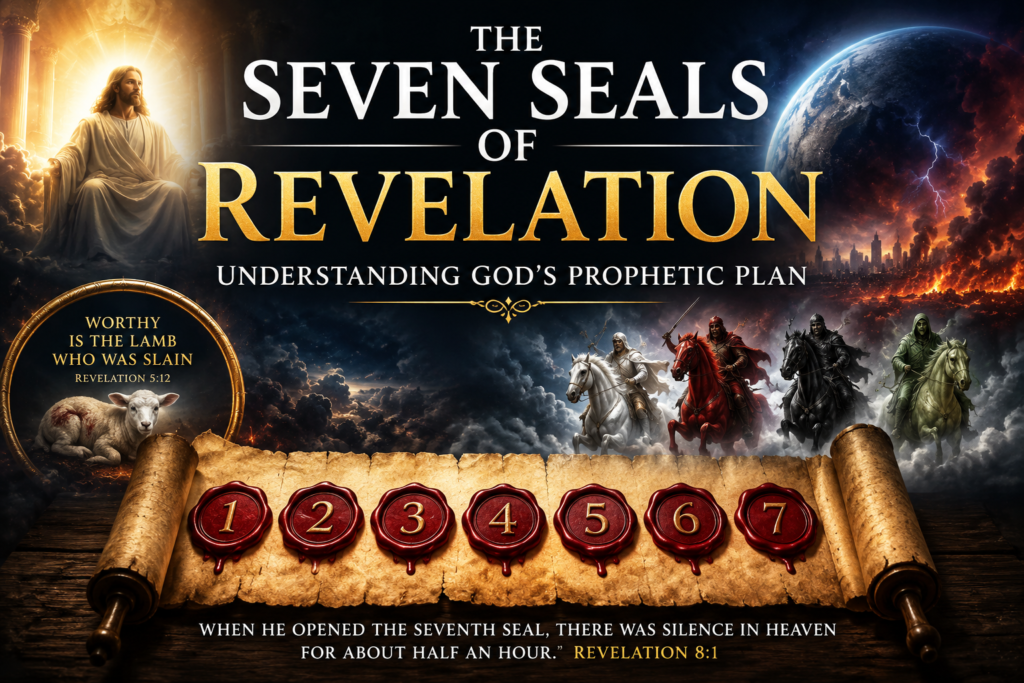
The Book of Revelation contains some of the most powerful and symbolic imagery in the Bible. Among its best-known visions are the horses that appear when the Lamb opens the first four seals of the heavenly scroll (Revelation 6:1–8). These riders, commonly called the Four Horsemen of the Apocalypse, symbolize God’s judgments and the events that characterize a fallen world.
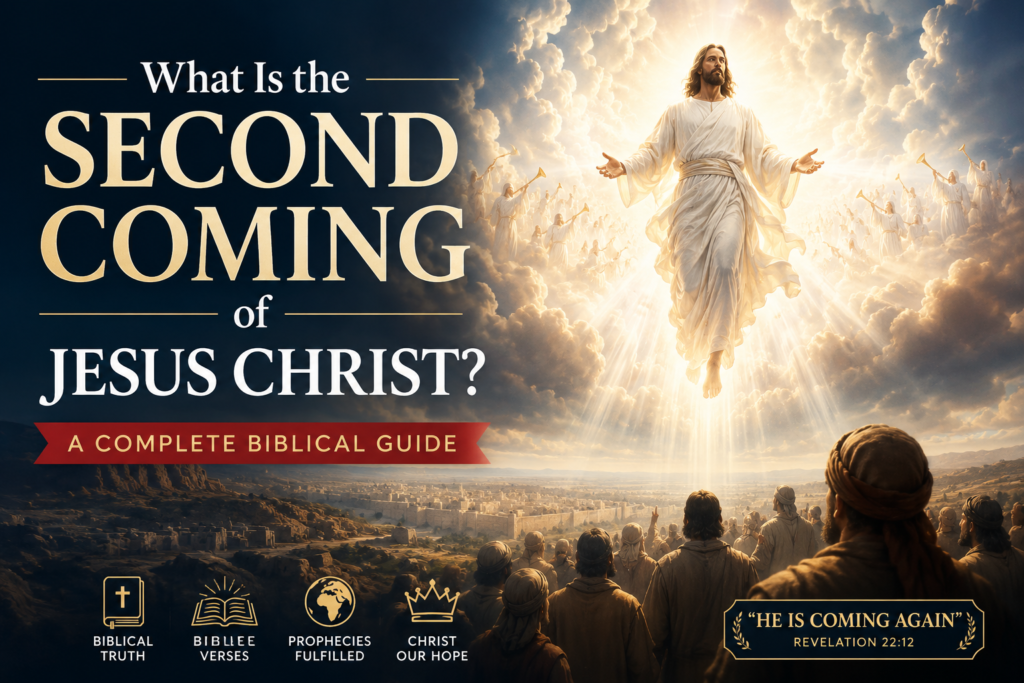
Later in Revelation, another white horse appears. Unlike the first rider, this horse is ridden by Jesus Christ Himself, who returns in glory as King of Kings and Lord of Lords (Revelation 19:11–16).
These horses are not merely dramatic symbols; they reveal God’s sovereignty, warn humanity to repent, and encourage believers to remain faithful until Christ returns.
Why the Horses of Revelation Matter
The horses remind readers that God is in control of history. Wars, famine, disease, persecution, and judgment do not happen outside His knowledge. Revelation assures believers that evil will not triumph forever because Jesus Christ will ultimately establish His righteous kingdom.
Understanding these visions also helps Christians avoid speculation and instead focus on the Bible’s central message: remain faithful to Christ and place your hope in His final victory.
The First Horse: The White Horse
Bible Reference: Revelation 6:1–2
John writes that he saw a white horse whose rider carried a bow and wore a crown. The rider went out “conquering and to conquer.”
Bible scholars differ on the identity of this rider.
Some interpret him as a symbol of military conquest or political power. Others believe he represents the Antichrist, who initially appears as a deceptive peacemaker before bringing widespread destruction. A minority view suggests he symbolizes the victorious spread of the gospel, although many evangelical scholars distinguish this rider from Christ because Jesus appears later on a different white horse in Revelation 19.
Regardless of the interpretation, the vision demonstrates that history unfolds under God’s sovereign authority.
The Second Horse: The Red Horse
Bible Reference: Revelation 6:3–4
The second horse is fiery red. Its rider receives power to remove peace from the earth so that people turn against one another. A large sword is given to him.
The red horse symbolizes warfare, violence, bloodshed, and social unrest. Throughout history, wars have caused immeasurable suffering, yet Revelation teaches that God remains sovereign even during humanity’s darkest moments.
Jesus also predicted increasing wars and rumors of wars before the end (Matthew 24:6–7).
The Third Horse: The Black Horse
Bible Reference: Revelation 6:5–6
The third horse is black, and its rider holds a pair of scales.
The voice announces inflated prices for basic food, indicating scarcity and economic hardship.
The black horse symbolizes famine, inflation, financial crisis, and unequal distribution of resources. Food becomes expensive while luxury items remain available, illustrating the social inequality that often accompanies times of judgment.
This vision reminds believers that earthly security is temporary and that true hope is found in God’s eternal kingdom.
The Fourth Horse: The Pale Horse
Bible Reference: Revelation 6:7–8
The fourth horse is described as pale or sickly green. Its rider is named Death, and Hades follows close behind.
Authority is given to this rider to kill through war, famine, disease, and wild animals.
This horse represents the devastating consequences of sin and divine judgment. Death has affected every generation since humanity’s fall, but Revelation assures readers that death itself will one day be defeated through Jesus Christ (1 Corinthians 15:54–57).
The White Horse of Christ
Bible Reference: Revelation 19:11–16
Near the conclusion of Revelation, John sees heaven opened and another white horse appears.
Its rider is called Faithful and True. Unlike the first rider, this is clearly Jesus Christ.
He judges with righteousness, defeats evil, and establishes His everlasting kingdom.
His robe is dipped in blood, His eyes are like blazing fire, and upon His robe is written:
“King of Kings and Lord of Lords.”
This final white horse represents victory, justice, holiness, and the complete triumph of God’s kingdom over every enemy.
Comparing the Horses
| Horse | Bible Reference | Main Symbolism |
| White Horse | Revelation 6:1–2 | Conquest or deceptive power (interpretations vary) |
| Red Horse | Revelation 6:3–4 | War and bloodshed |
| Black Horse | Revelation 6:5–6 | Famine and economic hardship |
| Pale Horse | Revelation 6:7–8 | Death and widespread destruction |
| Christ’s White Horse | Revelation 19:11–16 | The victorious return of Jesus Christ |
What Do These Visions Teach Christians?
The horses of Revelation are intended to strengthen faith rather than create fear.
They remind believers that:
- God remains sovereign over history.
- Sin brings devastating consequences.
- Human kingdoms are temporary.
- Christ will ultimately defeat evil.
- Christians should remain faithful while awaiting His return.
Instead of encouraging speculation about current events, Revelation repeatedly calls believers to perseverance, holiness, and hope.
Scholarly Perspectives
George Eldon Ladd viewed the Four Horsemen as symbols of forces active throughout the church age that intensify before Christ’s return.
Grant R. Osborne emphasized that the visions reveal God’s sovereignty over world events while calling believers to endurance.
G. K. Beale interpreted the horsemen as symbolic representations of judgments that occur throughout history under God’s authority.
Although scholars differ on the precise timing and fulfillment of these events, they broadly agree that Revelation points readers to Christ’s ultimate victory.
Conclusion
The horses of Revelation reveal that history is moving toward God’s appointed conclusion. War, famine, economic hardship, disease, and death are sobering realities, but they are not the final chapter of God’s story.
The final vision belongs to Jesus Christ, who returns on a white horse as the righteous King. His victory assures believers that evil will be judged, justice will prevail, and God’s kingdom will endure forever.
For Christians, the message of Revelation is not despair but hope. As we await Christ’s return, we are called to live faithfully, proclaim the gospel, and trust the One who is “Faithful and True.”
Key Bible References
- Revelation 6:1–8
- Revelation 19:11–16
- Matthew 24:4–14
- Zechariah 1:8–17
- Zechariah 6:1–8
- 1 Corinthians 15:54–57
- Isaiah 11:1–9
Recommended Resources
- G. K. Beale, The Book of Revelation
- Grant R. Osborne, Revelation (Baker Exegetical Commentary)
- George Eldon Ladd, A Commentary on the Revelation of John
- Robert H. Mounce, The Book of Revelation